
Salango: The Divers’ Village, Cradle of Ancient Cultures and Jewel of Ecotourism in Puerto López
Just ten minutes north of Puerto López lies the divers’ village of Salango — one of the most authentic and complete ecotourism experiences on the coast of Manabí. This small fishing village, protected by the majestic Machalilla National Park, combines more than five thousand years of pre-Columbian history, extraordinary marine richness, living traditions and a model of community tourism that allows visitors to connect deeply with nature and local culture.
A visit to Salango is far more than a simple outing: it is a journey through time. Its Archaeological Museum reveals the first inhabitants of this stretch of the Ecuadorian coast, while Manabí cuisine, the coral reefs and the new marine reserve turn every day into a sensory adventure. Here a group of skilled local divers share their knowledge and experience in protecting valuable marine resources such as black coral and the sacred Spondylus shell, while guiding tourists through their first snorkeling practice. The area also offers sport fishing, the Salango Viewpoint with spectacular views, paragliding, bicycle outings and ecotourism trails that wind through the tropical dry forest.
Ecological and Community Tourism: The Heart of Salango
The main goal of the Salango community is to showcase, promote, conserve and preserve the ecosystems, ways of life, customs, tourism, economy and every aspect of the lives of the commune’s inhabitants. This commitment takes shape in guided visits to the ecological trails, nurseries, observation points, artisan workshops, the island, the marine reserve and, above all, the Archaeological Museum.
Salango has become a living example of how a community can thrive on ecotourism without destroying its environment. The same fishermen and divers who for generations extracted resources from the sea now protect the coral, educate visitors and generate income through sustainable and responsible tourism. This transformation has made Puerto López and its surroundings one of the most coherent community tourism destinations in Ecuador.
Ecological Trail “La Josefina”
The visit to the ecological trail “La Josefina” is a tour designed for people of all ages. Just twenty minutes from the commune, in the Río Chico area, visitors enter a characteristic zone of tropical dry forest. Here the riches of Machalilla National Park blend with the simple lifestyle of the local inhabitants.
The tourist walks among native species, listens to the sounds of nature and contemplates the tropical forest landscape from a tourist observation point that offers fantastic views. The trail not only provides peace and tranquillity: it teaches how to preserve and care for natural resources and the environment, turning every step into a practical lesson in ecotourism.
La Cuchilla Viewpoint and Organic Nurseries
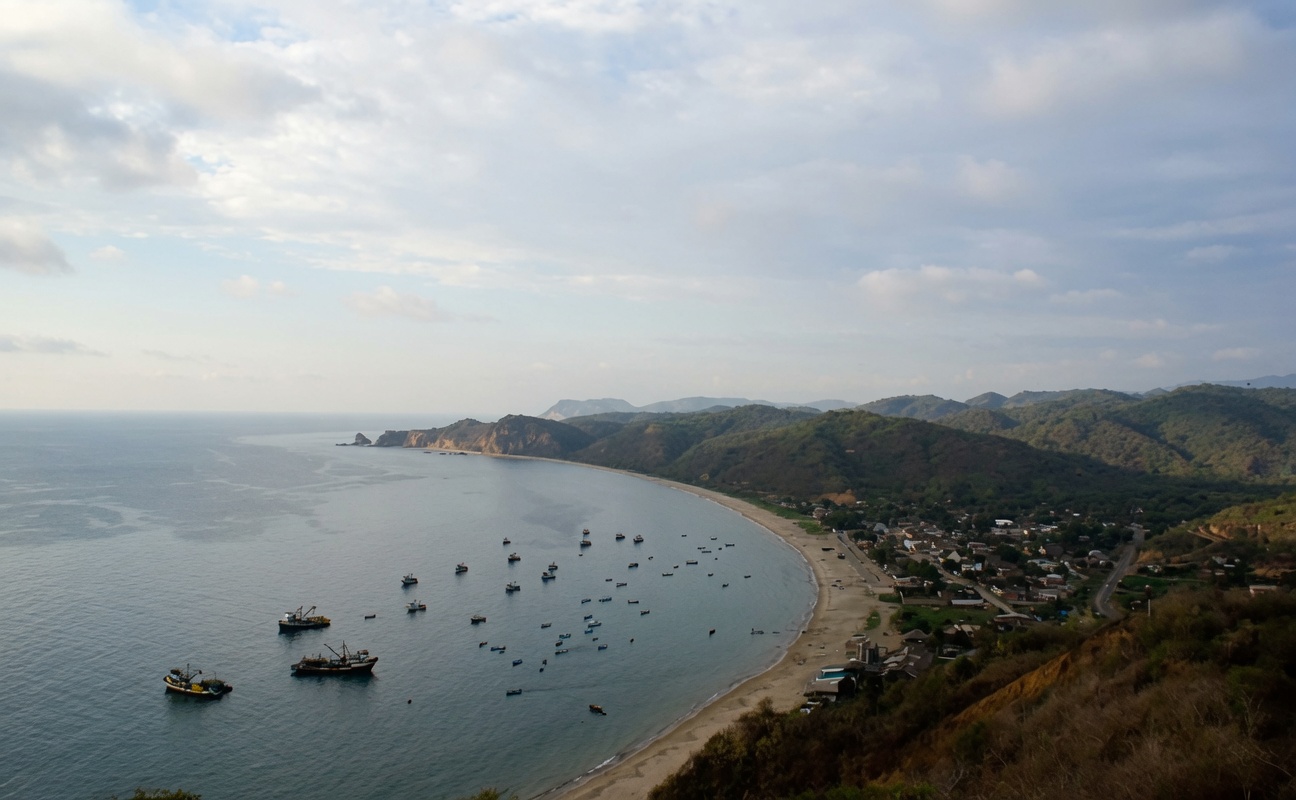 The “La Cuchilla” Viewpoint offers some of the most impressive landscapes of the tropical dry forest of Machalilla National Park. To reach it, visitors walk a natural path, admiring trees, shrubs, birds, insects and mammals while being enveloped by the charm of the scenery. Next to the observation point stands the “La Josefina” ecological nursery.
This organic nursery produces plants characteristic of the tropical forest destined for reforestation, as well as fruit trees and ornamental flowers. It forms part of an ambitious reforestation reserve project that seeks to improve native flora and fauna through integrated landscape planning. Visiting it reveals how the Salango community actively works for the regeneration of its territory.
Isla Salango and Its Marine Reserve
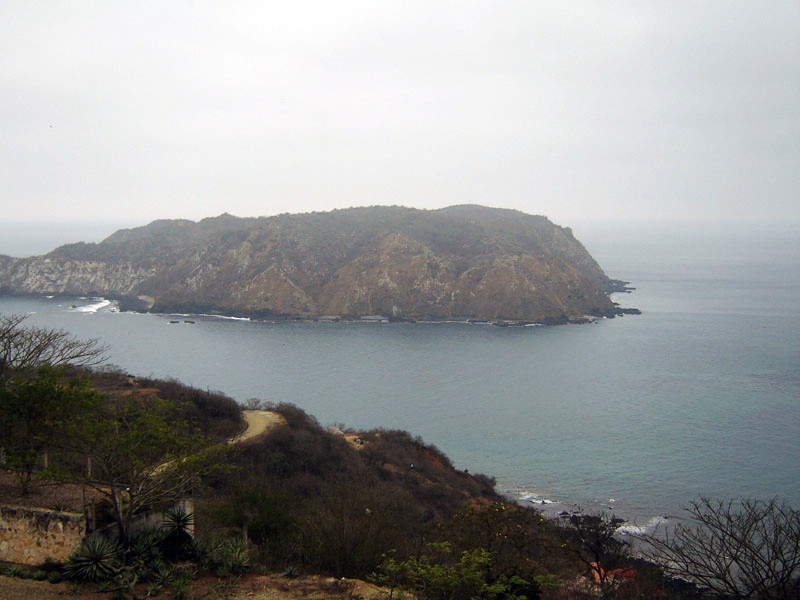
Isla Salango rises in the southwest of the district and is home to numerous seabirds: blue-footed boobies, pelicans, gulls and frigatebirds. Its xerophytic flora and spectacular cliffs create a unique landscape. In addition, the island was a cosmic-ceremonial centre of six pre-Columbian cultures — Valdivia, Machalilla, Chorrera-Engoroy, Bahía, Guangala and Manteña — native to the Ecuadorian coast.
From the white-sand beaches, accessible by boat, visitors enjoy an exceptional panoramic view. At the edge of the island lies the marine reserve, a great natural marine aquarium only three metres deep. Here tourists practise snorkeling or surface diving and discover coral reefs, colourful fish and all the beauty of the marine fauna of the Ecuadorian coast. Qualified native divers act as guides and share their knowledge about the protection of these fragile resources.
Salango Archaeological Museum: Ecuador’s Principal In-Situ Museum
 The Pre-Columbian Archaeological Museum of the Salango Commune is the principal in-situ museum in Ecuador. Its extraordinary collection of authentic ceramic objects and Spondylus shells reflects the worldview, social structure and craftsmanship of the pre-Columbian peoples. The exhibition shows the use and function of the pieces, pottery technology and the interrelationship of these societies with nature and daily life throughout different phases of settlement and cultural development.
The collection consists of 245 pieces of pre-Columbian pottery dating from 5000 BC to 1500 AD and is organised into six cultural collections:
- Valdivia
- Machalilla
- Chorrera-Engoroy
- Bahía
- Guangala
- Manteña
These cultures developed on the southeastern coast of Ecuador, in the area of Puerto López and Manabí. Salango seeks to consolidate its development process with ecological tourism led by the community, taking advantage of the potential of its natural and cultural resources — the heritage of the aboriginal peoples who settled in this area.
The current estimated population of the Salango Commune is 3,000 inhabitants. The territory includes the urban area of Salango, the Salango Commune itself and Las Tunas. The “Las Tunas” commune comprises Puerto Rico, Ayampe and Las Cabañas. The communities of southern coastal Ecuador (Salango among them) are descendants of the autochthonous Huancavilca-Manta peoples. Their first settlements belonged to the Valdivia culture, followed by Machalilla, Chorrera-Engoroy and Bahía, culminating in the Regional Integration Period known as Manteña (800–1530 AD). In 1526 the first contact between Spanish navigators and indigenous people took place in Salango, at the time of the powerful chiefdom of the Señorío de Salangome, the nucleus of a “league of merchants” that dominated the maritime trade of the precious Spondylus.
Natural Resources and Biodiversity
Salango is home to beautiful species of seabirds such as blue-footed boobies, frigatebirds and pelicans. Just a few metres underwater, the marine reserve boasts schools of fish and coral reefs, ideal for shallow diving. Its spacious and tranquil beaches invite rest. In the heart of the community stands the Research Centre and CIMS Museum, where studies are carried out and objects recovered from archaeological excavations in the area are exhibited.
Traditional Economy and Sustainable Tourism
Since time immemorial the subsistence activities of the inhabitants of Salango have been fishing, hunting and agriculture. These continue to be practised almost in the same way, with only minor technological differences. Today the Salango Commune has incorporated ecological tourism as an alternative economic activity. It administers the Archaeological Museum, possesses ecological nurseries, an ecotourism trail, observation points, the marine reserve, eight restaurants, community dining halls, a guesthouse, two cabins, three tour operators, van rental and a community craft workshop where pieces inspired by pre-Columbian ceramics are made.
Living Traditions: The Balsa Manteña Festival
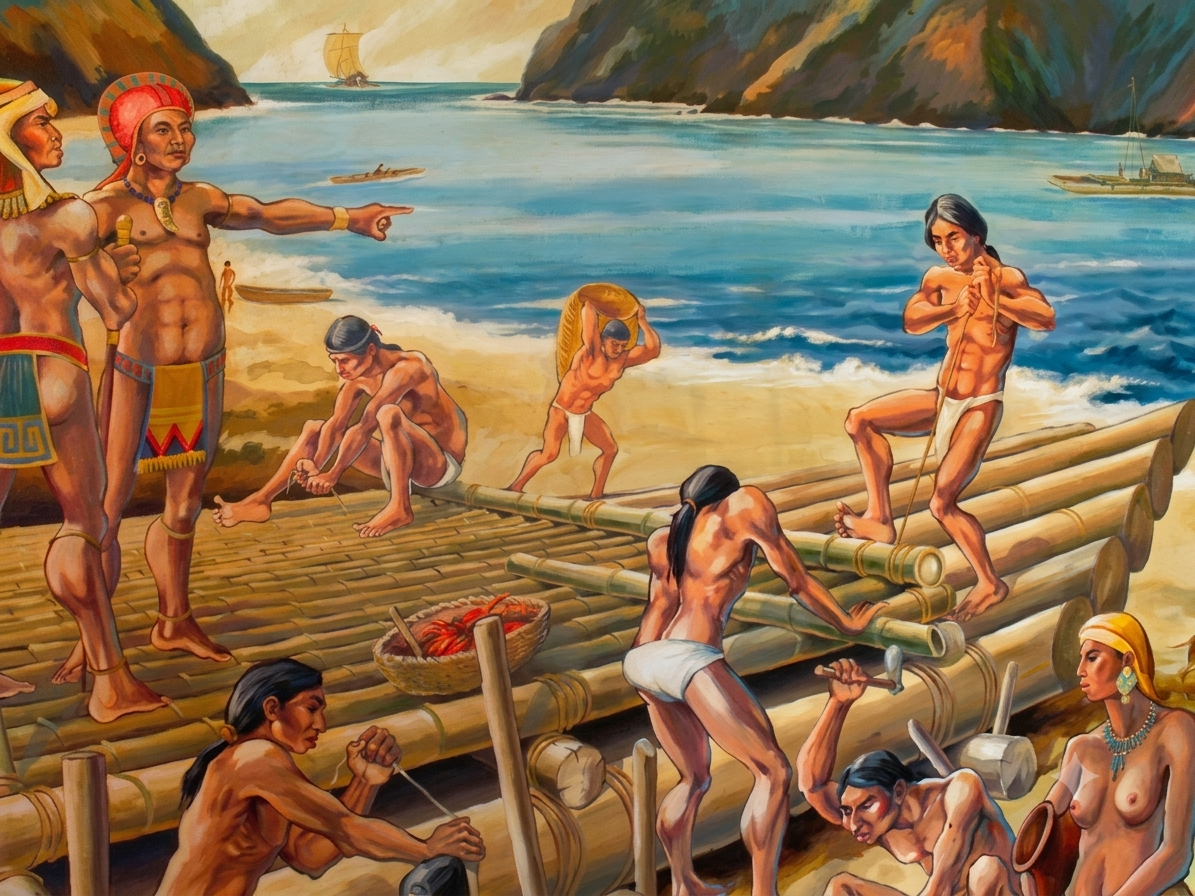
The people of the Salango Commune maintain and preserve several ancient traditions, both historical and cultural. One of the most deeply rooted is the “Balsa Manteña Festival”, with five thousand years of history. Every year indigenous roots are remembered and pre-Columbian identity is strengthened through the construction and navigation of balsas — the same rafts on which the Manteños and other tribes undertook long maritime journeys before the arrival of the Spanish. These intrepid sailors explored the coasts of Chile, Mexico, Peru and possibly Hawaii. Year after year the festival re-enacts these adventurous experiences and keeps alive the memory of a people who always looked to the ocean.
Salango within the Ecotourism Circuit of Puerto López
A visit to Salango combines perfectly with humpback whale watching (from June to September), an excursion to Isla de la Plata, a tour of Agua Blanca or a day of rest on the beaches of Machalilla National Park. This complementarity turns Puerto López into a complete destination where ecotourism, cultural tourism and nature tourism intertwine naturally.
Come and discover this unique corner. The hospitality of the people of Salango, the flavour of Manabí cuisine, the silence of the dry forest and the song of the seabirds create an experience that remains forever. From Puerto López, the heart of sustainable tourism in Manabí, Salango awaits you with open arms: a village of divers, of millennial history and of a green future.